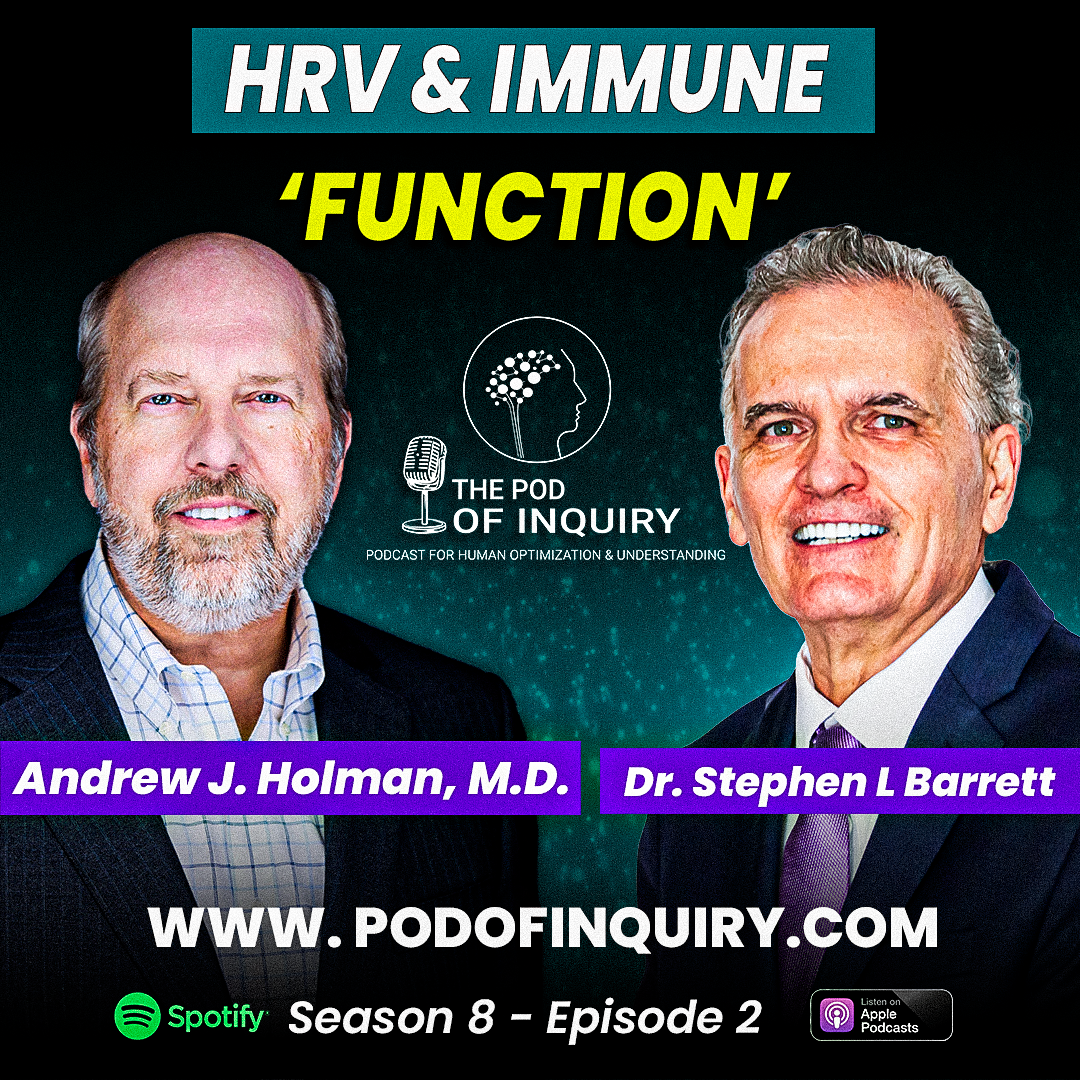
What if a 5-minute test could predict—with 90% accuracy—whether a $50,000 medication will actually work for you?
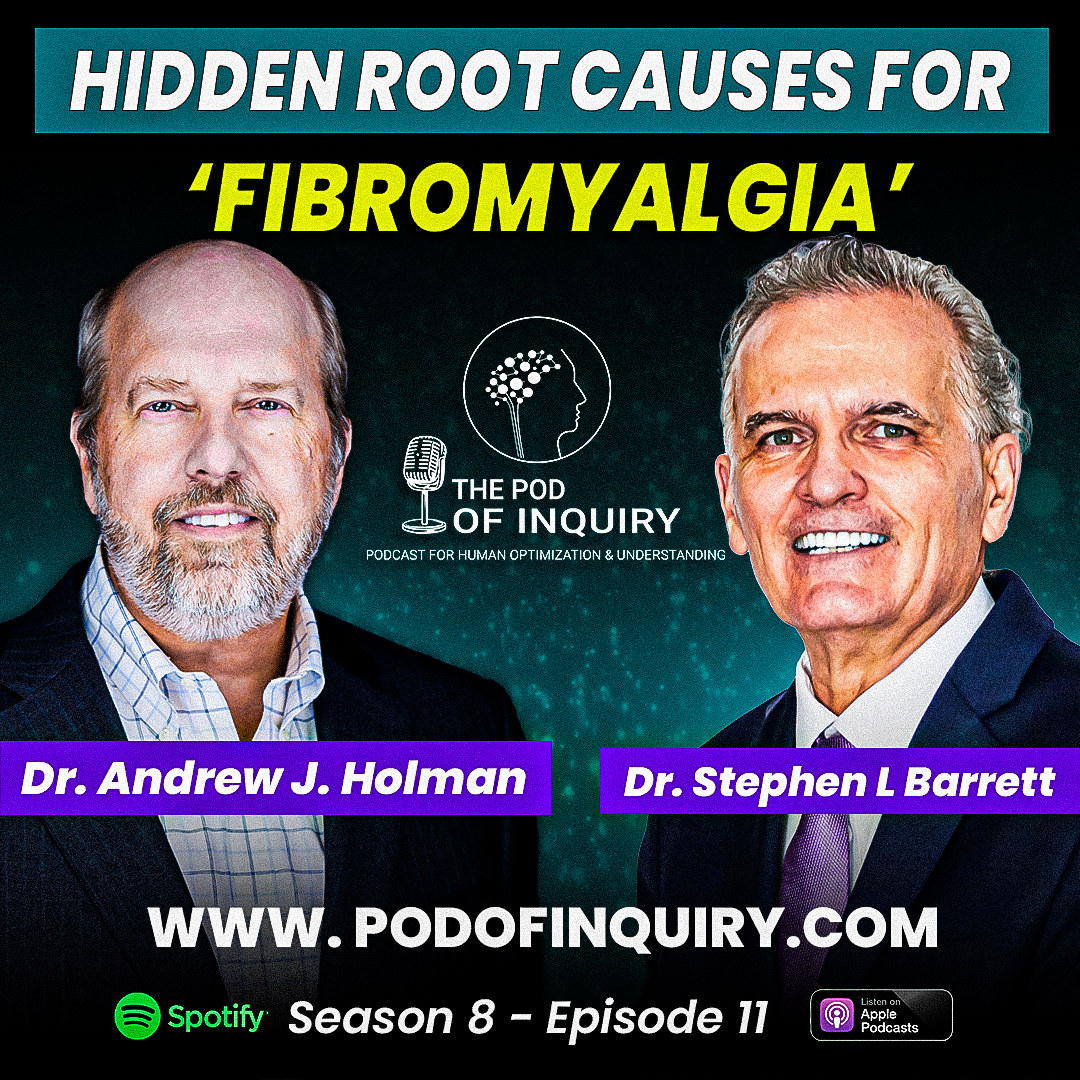
In this episode, Dr. Barrett sits down with Dr. Andrew Holman, rheumatologist and CEO of Inmedix, to explore the hidden biology of stress and how it directly controls your immune system—millisecond by millisecond—through heart rate variability (HRV).
This isn’t another generic “manage your stress” talk. We dive into measurable, clinical-grade HRV and how it’s changing the way doctors predict treatment response in rheumatoid arthritis, autoimmune disease, and chronic pain. (HRV and Immune Function)
In This Episode, You’ll Discover:
- Why wearables like Oura Ring and Whoop don’t tell the full clinical story
- The surprising link between sleep apnea and rheumatoid arthritis (even without snoring)
- How stress biologically regulates immune function in real time
- How an FDA-cleared HRV test measures both branches of the autonomic nervous system
- Why this technology could save $34 billion in healthcare costs over the next decade
The big takeaway: Stress isn’t psychological—it’s measurable physiology that may be sabotaging your treatment outcomes.
Watch The Podcast
Listen to The Podcast
Also available on


Author Biography

Andrew J. Holman, M.D.
Dr. Holman is the founding rheumatologist at Pacific Rheumatology Associates, Inc., the director of Research at Pacific Rheumatology Research Inc, a former President of the Northwest Rheumatism Society (2005), and a Clinical Associate Professor of Medicine at the university of Washington.
He has a 25-year clinical and 19-year rheumatology research career experience. He has 16 lead author published papers, and 25 lead author published abstracts. For Inmedix, he has designed, completed and published 15 clinical studies, including FDA negotiations, involving nearly 1500 patients.
Dr. Homan’s research highlights include reporting and eventually licensing use of dopamine agonists as a treatment of fibromyalgia, exploring the impact of hypermobility syndromes, evaluating established and innovative autonomic nervous system analysis with heart rate variability in patient with rheumatoid arthritis and other autoimmune diseases, and broadening understanding of pain in patients with PC3 (positional cervical cord compression) using dynamic flexion-extension MRI’s
Show Notes from this episode
Episode Overview
This episode features an in-depth conversation with Dr. Andrew Holman about heart rate variability (HRV), the measurement of stress, and its profound impact on the immune system. Dr. Holman discusses his company’s FDA-cleared diagnostic tool and explores how autonomic nervous system dysfunction affects rheumatoid arthritis and other conditions.
00:00 – Introduction
- Welcome and episode overview
- Introduction to Dr. Andrew Holman and his company Inmedix
- Topic focus: HRV measurement and the interplay between stress and immune system
- Discussion of predicting responses to immunomodulating drugs for rheumatoid arthritis
- Emphasis on stress as a pervasive factor in human physiology
01:38 – Beginning of Interview
- Dr. Barrett welcomes Dr. Holman to discuss stress and heart rate variability
- Recognition that HRV awareness has grown over the past 5-6 years
- Most people have heard of HRV but don’t fully understand interpretation
03:26 – What is Heart Rate Variability?
- HRV explained: the normal variation in heart rate that occurs with respiration
- Technical term: respiratory sinus arrhythmia
- Heart rate accelerates slightly during inhalation, decelerates during exhalation
- Standard deviation between beats is the most basic evaluation method
- Zero variability is actually a bad prognostic sign
- HRV is controlled by the brain (autonomic nervous system), not the heart
04:02 – The Autonomic Nervous System Connection
- HRV provides a window into autonomic nervous system (ANS) function
- Sympathetic (fight or flight) dominance reduces HRV
- Parasympathetic (rest and restore) dominance increases HRV
- Parasympathetic associated with sleep, growth hormone, recovery, and healing
- HRV reflects the brain’s management of stress and allostatic load
- Allostatic load defined as “what life dumps on you” – includes dehydration, hunger, infections
05:00 – Clinical Importance of HRV
- HRV is the most convenient and actionable way to measure stress response
- Discussion of normative values and individual variations
- Question raised about differences between sexes and age groups
06:01 – Consumer Devices vs. Medical Grade
- Dr. Holman wears a Whoop strap
- Consumer devices (Whoop, Garmin, Fitbit, Oura Ring, Apple Watch) not FDA-cleared for HRV
- These fitness devices compare users to themselves (better or worse than yesterday)
- Medical applications require comparison to normal healthy populations
- Consumer devices use photoplethysmography (green light) which adds measurement error
08:18 – Development of Cloud HRV Technology
- Mathematics originated from Omega Wave company
- Used by nearly half the NFL, Premier League, Olympic athletes for performance training
- Dr. Holman conducted nine clinical studies with the technology over 25 years
- FDA clearance achieved in 2025
- Requires high-fidelity ECG with 500+ samples per second to accurately locate QRS peak
09:33 – Technical Requirements for Accuracy
- Photoplethysmography (green light in fitness trackers) gives curves, not precise peaks
- This imprecision makes HRV measurements inaccurate regardless of mathematical algorithms
- Medical-grade requires exact beat location identification
10:00 – The Cloud HRV System Features
- Five-minute test with patient lying down
- Uses limb leads (wrists and ankles) instead of chest straps
- More patient and staff-friendly than traditional methods
- Tracing goes to cloud for processing
- Report generated in five minutes showing both sympathetic and parasympathetic metrics
11:00 – Breakthrough in Measuring Both Systems
- Time domain (standard deviation) and frequency domain established in 1996
- Geometric domain is relatively new
- Previous systems could measure parasympathetic but had to infer sympathetic
- Cloud HRV is FDA-cleared to discretely measure BOTH sympathetic and parasympathetic
- First system to provide objective metrics for both branches of ANS
11:41 – Understanding the Measurements
- Question about how separate sympathetic/parasympathetic measurement works
- Explanation that FDA-level scrutiny enables exquisite precision and accuracy
- Doctors must interpret what to do when sympathetic goes up and parasympathetic goes down
- Important not to miss autonomic dysfunction that could undermine treatment
13:09 – The Importance in Medicine
- 55,000-60,000 studies on PubMed about HRV
- Correlations found with heart disease, bowel issues, cancer risk
- Relatively new application in immune system disorders
- Paradigm shift: stress response directly affects immune system as survival mechanism
- Problem: immune activation counterproductive in autoimmune conditions like rheumatoid arthritis
14:27 – Building Better Tools
- Medicine now has a “better hammer to build a house with”
- Everyone knows stress matters, but now there’s objective measurement
14:41 – Mainstream Recognition of Stress
- Growing mainstream recognition that stress is measurable and has definitive effects
- Huge correlation between stress and immune function
- Reference to Dr. Kevin Tracy’s vagal nerve stimulator work
16:11 – Vagal Nerve Stimulation Studies
- FDA-cleared for epilepsy for many years
- Vitamin pill-sized implant in neck
- Demonstrated reduction in IL-1, IL-6, and TNF (pro-inflammatory cytokines)
- Controlled study done under anesthesia to eliminate outside interference
- Credit to Kevin Tracy, Paul-Peter Tak, and others
16:19 – Medical School Teaching vs. Reality
- Dr. Holman’s medical school training in 1980s taught immune system was “firewalled”
- Opposite turned out to be true
- Brain monitors inflammation by the millisecond through vagus nerve
- System is incredibly wired for optimal performance in fighting infections and cancer surveillance
20:57 – Clinical Applications and Cautions
- Dr. Holman must distinguish between FDA clearance limits and physician practice
- Focus on optimizing autonomic state before patients fail multiple expensive treatments
- Rheumatoid arthritis biologics ($50,000+ drugs) only control disease 25% of the time
- This ceiling effect is the same across 14-15 approved biologics
- Question: What are we missing?
22:39 – Sleep Apnea Connection
- Most commonly studied dysautonomic state is obstructive sleep apnea
- RA patients don’t die of joint disease – they die of heart disease
- Framingham risk factors don’t explain the added cardiac risk in RA patients
23:07 – Sleep Heart Health Study 2004
- Untreated sleep apnea equals cigarette smoking as cardiovascular risk factor
- Sleep apnea treatment typically focused on heavier men who snore
23:31 – Groundbreaking Japanese Study (Shimizu, 2003)
- 90+ consecutive RA patients studied (85% women, typically thin, didn’t snore)
- Sleep apnea prevalence: 53%
- Patients had no typical symptoms (no snoring, not overweight, not tired)
- Study presented at American College of Rheumatology
24:01 – Treatment Effects
- Seven patients with significant sleep apnea treated with CPAP
- Treatment turns off the autonomic alarm system over about five months
- Cardiac risk returns to baseline of those who never had sleep apnea
- Swollen/tender joint count and C-reactive protein reduced by 35%
- Symptoms improved correspondingly
25:00 – Wake-Up Call for Rheumatologists
- Three key lessons:
- Don’t trust medical school teaching about who has sleep apnea
- Don’t ignore treatable cardiac risk factors in RA patients
- Optimizing autonomic state may reduce RA activity (like vagus nerve stimulation)
25:45 – The Future of Medicine: Autonomics
- Dr. Holman’s colleague: “Autonomics will be to this century what infectious disease was to the last”
- Can’t take care of people properly without accounting for stress response
- Difficult to treat hypertension, heart disease, sleep problems, pain under stress
- Fibromyalgia essentially untreatable under high stress
- Now immune system must be added to the list
27:19 – Prevention and Risk Assessment
- Discussion of simple interventions often overlooked in clinical practice
- Japanese study shows sleep apnea assessment needed even without typical symptoms
- At least in RA patients, lack of snoring doesn’t rule out sleep apnea
28:12 – Amsterdam Study
- Can identify patients at risk for developing RA (labs, family history, physical exam)
- Published that autonomic state and resting heart rate could be independent risk factor
- Predicts who will develop RA in next three years
- Opens door to preventative measures
- Only one study but important food for thought
28:58 – Clinical Philosophy
- Goal: up-regulate normal systems, “put the train back on the tracks”
- Best treatment approach empirically
- Dr. Barrett’s pain practice experience: controlling 1-2 of 5 pain generators allows physiology to take over
- Human body maintains better homeostasis when some issues are controlled
29:09 – Current Adoption Status
- Term “immuno-autonomics” exists for at least 12 years
- Kevin Tracy’s work made rheumatologists aware of potential linkage
- FDA clearance brought more attention
- Currently used mostly as last resort for treatment failures
- Should be relevant from day one of diagnosis, not just at the end
30:00 – Availability Timeline
- FDA cleared in January 2025
- Soft launch in June 2025 (six doctors in five states)
- Currently ramping up production
- Covered by Medicaid, Medicare, and all commercial insurance so far
- Low price point
- Expected widespread availability by first quarter 2026
- Currently doctors can consider vagus nerve stimulation, sleep studies, and stress discussions
31:34 – Patient Perspectives (UK Study)
- UK study: 97% of RA patients said stress significantly affected disease course
- 65% believed stress played a role in getting the disease
- Important gap: patients recognize stress impact, but it’s not being measured objectively
- Stress has become hard science, not just “warm and fuzzy”
32:27 – Future of Rheumatology Practice
- Prediction of paradigm shift once machines are available and knowledge integrates
- May become baseline assessment before starting immunosuppressive drugs
- Medicine adopts slowly, but success drives rapid change when:
- Successful patient outcomes
- Patient demand
- Affordability
- Availability
33:08 – Patient Interest
- Currently only 25% full response rate with biologics (frustrating for doctors and patients)
- Vagus nerve study had 20,000 people wanting to enroll (only 200-300 accepted)
- High level of interest from patients
33:23 – HRV as a Missing Vital Sign
- Dr. Holman’s personal opinion: HRV is a missing vital sign
- Comparison to blood pressure – wasn’t measured a couple hundred years ago, now elemental
- Believes stress response and ANS function may reach similar importance level
34:10 – Follow-Up Testing Recommendations
- No official recommendation in FDA labeling
- Doctors can test weekly, monthly, yearly – their choice
- Insurance very cooperative due to low price
- Physicians find it useful based on field testimonials
- Patients are most excited – validates what they’ve been saying all along
34:44 – Predictive Study Results
- Five-minute test predicted one year in advance who would respond to biologics
- 90% sensitivity and 95% specificity
- Predicted non-responders with 100% specificity (didn’t miss anybody)
- First study – FDA wants second study (appropriate)
- Demonstrates potential power of the approach
36:27 – Combination Treatment Study (ACR 2015)
- Pilot study of 60 RA patients
- Started on Enbrel (etanercept) – standard biologic
- Non-responders after 2-3 months given restless leg drugs (open label)
- Restless leg may be related to sympathetic bursts
- 79% achieved remission within two years
- Most got off steroids and weekly methotrexate
- Need double-blind prospective study to confirm
38:58 – East Meets West Medicine
- Seattle’s approach combines Eastern and Western medicine
- Using Western scientific standards to validate Eastern approaches
- Physicians can use Eastern methods (Tai Chi, meditation, diet, exercise, yoga)
- 3,000-year-old practices to wind down autonomic stress response
39:08 – Need for Objective Measurement
- Patients may feel better but still be in sympathetic state
- Can’t afford to leave patients in sympathetic dominance even if subjectively improved
- Need precision measurement to verify if interventions moved the needle
- Prospective studies will determine if this approach is validated
39:38 – Restless Leg and Nerve Entrapment
- Dr. Barrett’s observation: high percentage of restless leg patients have common peroneal nerve entrapments
- Decompressing the nerve resolves restless leg
- More common in diabetic patients
- Diabetic peripheral neuropathy causes nerve edema (~50% larger in cross-section)
- Well-documented with ultrasound studies
- Nerve tunnel size doesn’t change, so swollen nerve gets compressed
- Simple 15-minute surgery similar to carpal tunnel release
41:39 – Phoenix Sign (Discovered 2017)
- Diagnostic test for common peroneal nerve compression with drop foot
- Inject 0.3cc lidocaine under ultrasound guidance
- Within 4 minutes, most patients regain full dorsiflexion strength
- Mechanism: focal nerve compression is neuro-ischemic
- Temporary vasodilation provides more oxygen to nerve
- Now can use D5W (dextrose 5% water) instead of lidocaine
- Inject 3cc subcutaneously next to fibular neck
- Takes 2 minutes, doesn’t hurt
- Check dorsiflexion at 4 minutes
- Determines if nerve entrapment is contributing to restless leg symptoms
- Published studies available
42:14 – Importance of Diagnostics
- Diagnostics are key to clinician excellence
- 90% of diagnosis traditionally from history and physical exam
- Provocative maneuvers and technology also important
- Rheumatology is all about puzzles with multiple variables
42:52 – Atypical Presentations
- 20% of patients “didn’t read the textbook”
- Sometimes very rare disease, sometimes unusual presentation of common disease
- Physician’s job to figure it out regardless
- Rheumatology requires puzzle-solving mindset
- Sherlock Holmes approach necessary
44:37 – Economic Impact Study
- University of Washington published in Journal of Medical Economics (2018)
- Immuno-autonomic approach (not just diagnostic but therapeutic opportunities)
- Could reduce US rheumatoid arthritis care costs by $34 billion over 10 years
- Savings from:
- Not using drugs that won’t work
- Getting less expensive drugs to work more often
- Not letting autonomic stress drive disease to excess
- Question raised: how many other diseases are driven to untreatable excess by stress?
46:40 – Autonomics Throughout Medicine
- JAMA study: 70% of primary care visits related to ANS
- Symptoms: stomach issues, bowel problems, dizziness, sleep, pain, palpitations
- Two types of drug side effects:
- Serious toxicity (liver necrosis)
- Unpleasant ANS-related (nausea, dizziness, insomnia, anxiety)
- ANS has “fingers in almost every physiology”
- Doesn’t cause everything but can influence enough to undermine treatment
- Medicine moving toward more holistic approach – “looking at the whole person”
48:04 – Stress, Strain, and Duress
- Discussion of chronic pain patients degenerating over years
- Develop various conditions (Epstein-Barr, immune dysfunction)
- Immune system “worn out” or responding badly
- Started with initial injury (crushed foot, etc.)
- Like watching slow motion deterioration
- Terminology: stress vs. strain vs. duress
- Sophisticated machine (human body) has limits
- Regulatory mechanisms get “constantly pummeled”
- Science is revealing the price people pay
- Question: can we address the science even if we can’t fix the root problem?
48:40 – Helping with Suffering
- Always want to fix the cause if possible
- Also can’t let one problem ruin every other body system
- Importance of being “learn it all” rather than “know it all”
50:00 – About Inmedix Company
- Website: inmedics.com (I-N-M-E-D-I-X)
- Stands for Innovative Medical Discovery
- Highly regulated company with careful claims
- Website focused on clinical data
- Links to rheumatology grand rounds at:
- University of Washington
- Brigham and Women’s Hospital
- Hospital for Special Surgery (HSS)
- Real science dovetailing with Kevin Tracy’s work
51:01 – Company Timeline and Funding
- Started in 2017
- Raised $18 million from angel investors (no VCs)
- FDA clearance: January 2025
- Soft launch: June 2025
- Confirmed: doctors interested, patients more interested, insurance paying
- Software-based system (cloud processing)
- Goal: available to doctors without burden to patients or payers
51:38 – Company Mission
- Software company interested in participating in solution
- Not just quantifying autonomic state
- Working with strategics, doctors, clinicians, patients
- Understanding remedies to autonomic dysfunction
52:01 – Business Development
- Called a “blue ocean” in business terms (new specialty)
- Already outlining medical textbook with many chapters on autonomic states
- Fledgling startup currently
- Open angel round ongoing
- Planning $10 million Series A
- Then national launch with full team hiring
- Focus on quality management systems and regulatory compliance
- Ensuring patient benefit, physician benefit, and payer win
53:35 – Vision for the Future
- HRV as a missing vital sign
- Once available, smarter people will make discoveries
- Average clinicians already thinking about applications
- FDA clearance gives physicians decision-making authority
- Promise: safe, precise, and accurate measurement
53:56 – Closing Thanks
- Dr. Barrett impressed by paradigm-shifting work
- Will continue monitoring progress
- Appreciation for sharing knowledge
Sponsors Of The Episode




Approved Medical Solutions
Your source for Oxalate free Nitric Oxide Supplementation
Non-licensed patients can use code “sbarrett” for a 10% discount.
Licensed practitioners can access the discounts by registering and when at checkout put “podofinquiry” (no space and not case sensitive) in the coupon section.

Ketone
Nitric Oxide
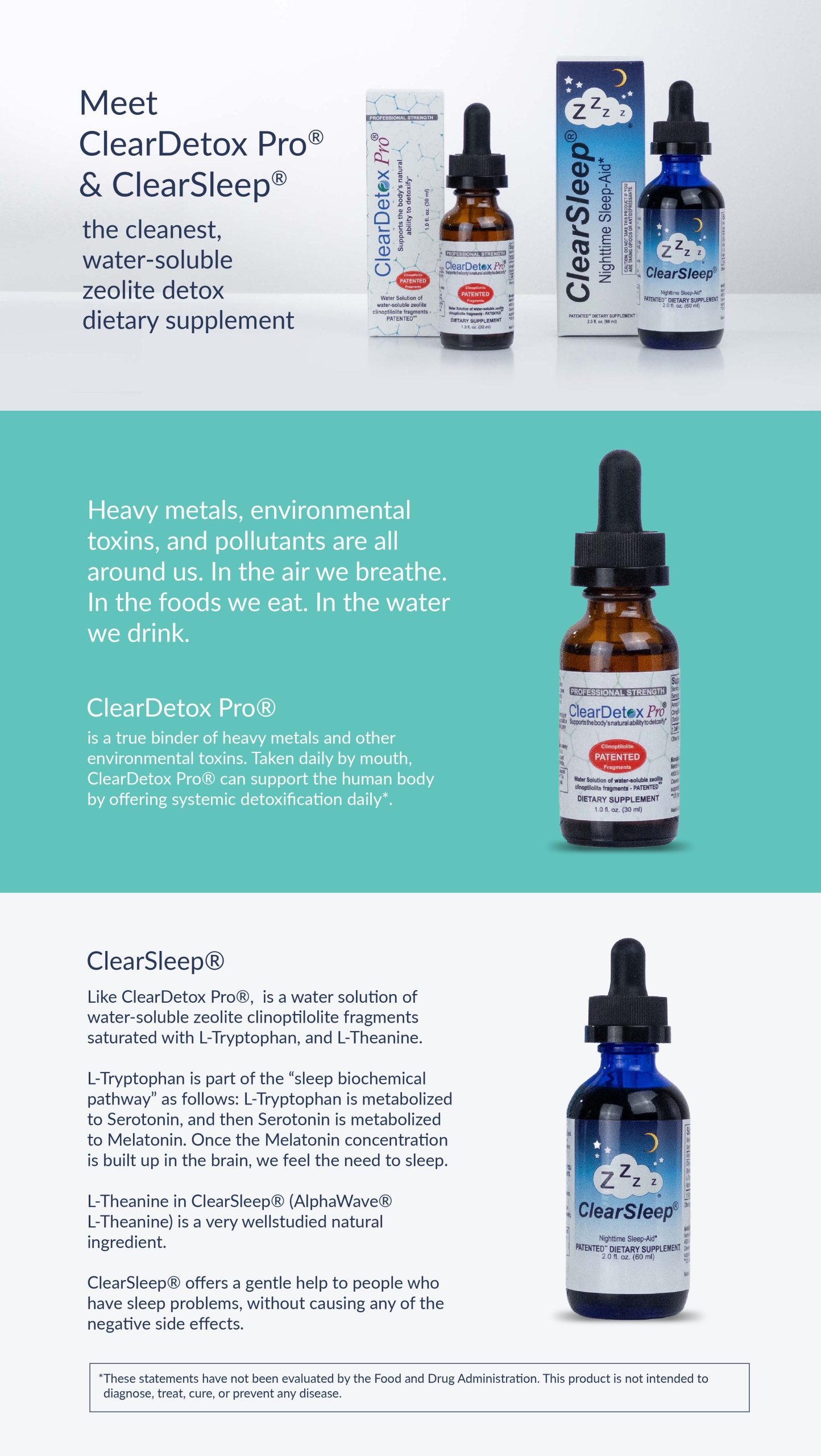
ClearDetox Pro & ClearSleep