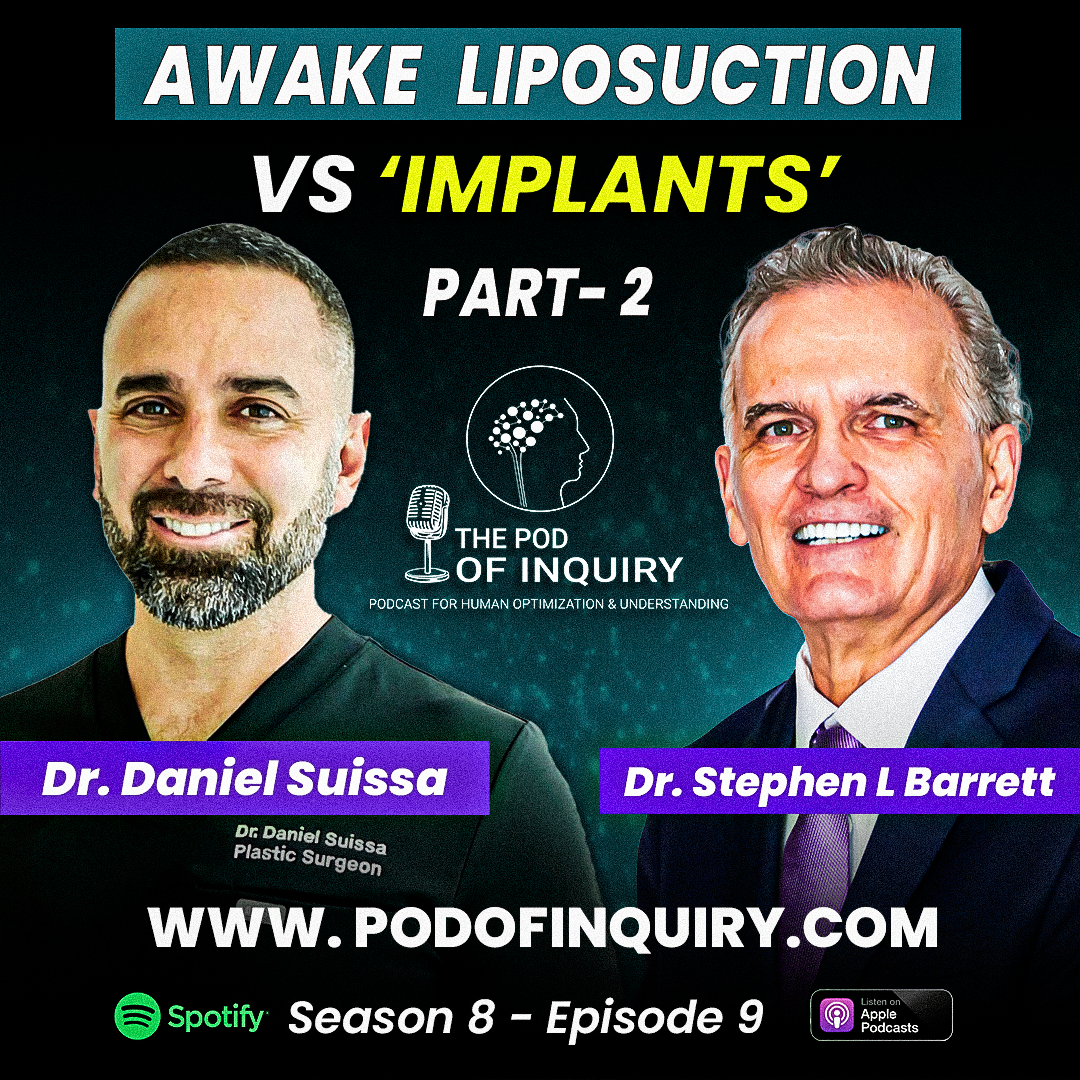
What if some of the most advanced plastic surgery today is performed while patients are completely awake—and it’s actually safer?
In this episode of Pod of Inquiry, we sit down with Dr. Daniel Suissa to explore the evolution of awake liposuction, fat transfer, and modern body sculpting—and why many surgeons are rethinking traditional implant-based approaches.
From the science of tumescent anesthesia to the psychology of cosmetic surgery, this conversation pulls back the curtain on what patients should really know. (Awake Liposuction vs Implants)
💉 In This Episode, You’ll Learn:
- Why some surgeons are moving away from breast implants and the growing conversation around Breast Implant Illness (BII)
- How awake liposuction avoids general anesthesia—and why that can improve safety and precision
- The neuroscience of pain control, including how vibration leverages Gate Control Theory
- When cosmetic surgery won’t fix the underlying issue—and how responsible surgeons screen for unrealistic expectations
- The rise of social media–driven procedures in younger patients
- Real-world complications, risk management, and surgical transparency
Dr. Suissa shares insights from his training at the University of Toronto and Yale University, along with his experience practicing across North America—from Montreal to Beverly Hills to Miami.
Whether you’re considering cosmetic procedures, interested in regenerative aesthetics, or simply curious about how neuroscience intersects with surgical innovation, this episode delivers a thoughtful, evidence-informed perspective.
🎧 Watch now to understand the real risks, benefits, and breakthroughs in modern body sculpting.
Watch The Podcast
Listen to The Podcast
Also available on


Author Biography
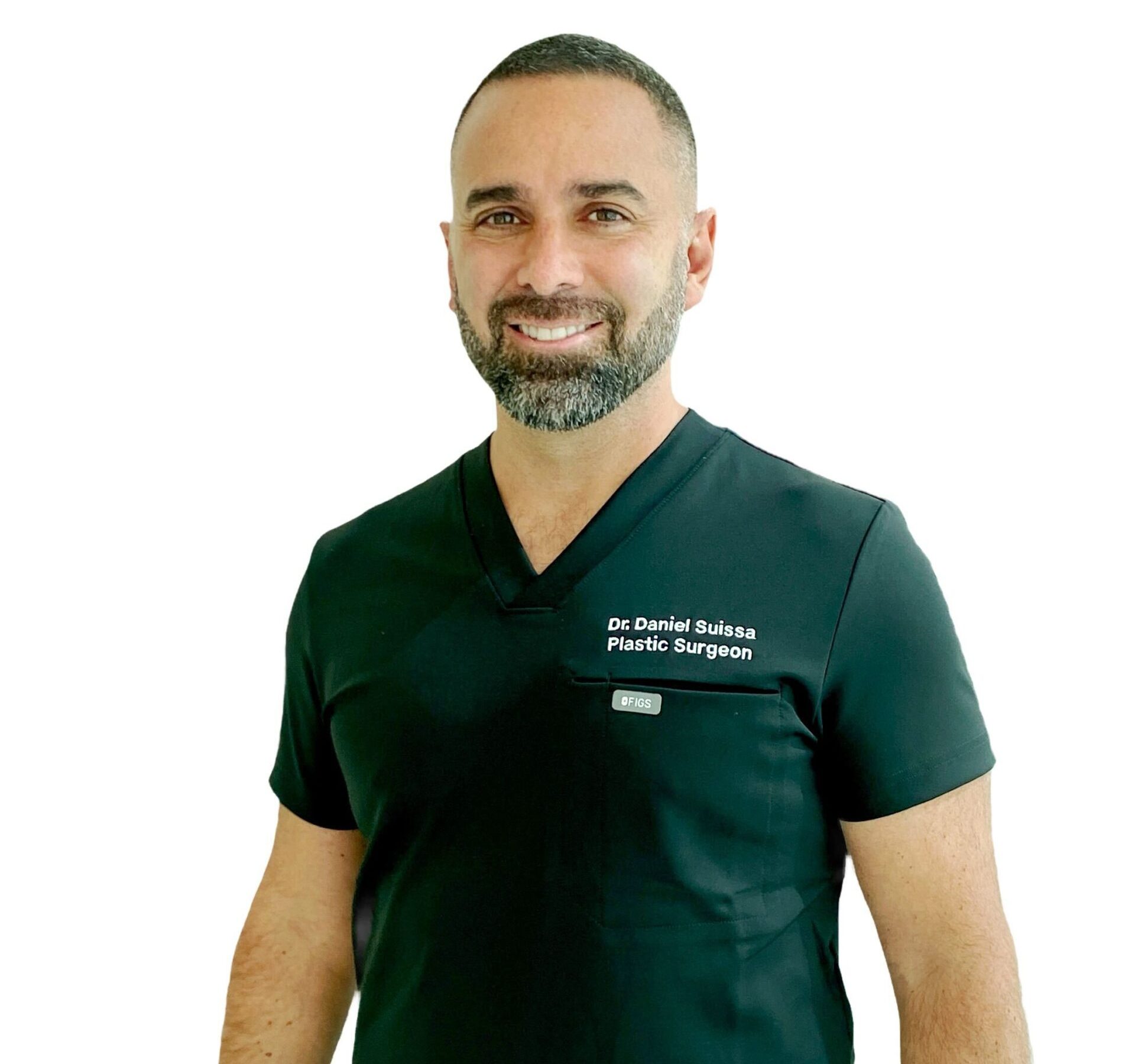
Daniel Suissa, M.D., FRCS
With an eye for aesthetics and a passion for innovation, Dr. Suissa is reimagining the future of cosmetic surgery.
After earning a master’s degree in Clinical Epidemiology from McGill University, Dr. Suissa completed his medical school and plastic surgery training at Université de Montréal in Canada. There, he received the Canadian Plastic Surgery Board certification and became a Fellow of the Royal College of Surgeons.
To solidify his plastic surgery skills and technique, Dr. Suissa completed an aesthetic fellowship at the university of Toronto, where he was trained by some of the world’s top aesthetic plastic surgeons. He went on to complete an additional fellowship with a specialization in cosmetic breast surgery at Yale University.
Dr. Suissa’s leading-edge specialization put him at the forefront of the latest techniques, allowing him to expand his focus to the safety and effectiveness of new clinical techniques. Soon after founding Squlpt, he invented and developed SoftSqulpt, a revolutionary 360 awake liposuction and fat transfer innovation that is safe, gentle and close to pain-free.
Dr. Suissa was recently appointed a member of the Safety Task Force for BBL Surgery. He’s also authored multiple research articles on plastic surgery, including one of the most peer-reviewed articles on safety protocols for BBL procedures.
Known for his laser-sharp focus and warm, compassionate approach, Dr. Suissa pushes the boundaries of innovation and merges cutting-edge techniques to achieve natural-looking, flawless results.
Show Notes from this episode
00:00 – Introduction
- Welcome and episode overview
- Guest introduction: Dr. Daniel Suissa, plastic surgeon with practices in Miami and California
01:49 – Dr. Suissa’s Background & Journey into Body Sculpting
- Discussion of how Dr. Suissa found his specialty in body sculpting
- Training background: University of Toronto fellowship, Yale fellowship
- Career path: Connecticut → California (6 years in Beverly Hills) → Miami (4.5 years)
- Philosophy: Standing on shoulders of giants while seeking incremental improvements through trial and error
03:20 – Training & Geographic Journey
- Canadian medical training and fellowship experience
- Second fellowship at Yale as entry into US practice
- Opening of Sculpt clinic in California
- Move to Florida and expansion of practice
04:52 – Miami as a Plastic Surgery Hub
- Discussion of Miami’s reputation in cosmetic surgery
- Impact of social media on widespread demand for cosmetic procedures
- Concern about the pendulum swinging too far with young patients
05:48 – Social Media’s Impact on Cosmetic Surgery
- Rise of cosmetic procedures driven by social media
- Concerns about patients (especially young women) wanting too much too soon
- Discussion of procedures becoming commonplace in early 20s rather than later in life
06:30 – Comparing Canadian vs US Markets
- Canada’s more conservative approach to cosmetic surgery
- Historical lag time in adopting new trends and technologies
- Recent convergence: Canada has largely caught up to US demand
08:02 – Patient Expectations & Surgical Philosophy
- “The greatest enemy of good is better” – when patients want too much refinement
- Importance of patient education for realistic expectations
- Distinction between surgical success from surgeon’s vs patient’s perspective
09:36 – Managing Patient Expectations
- Quote: “If you’re not okay with your worst day in court, don’t do it”
- “A surgeon without complications is a surgeon who doesn’t operate”
- Balancing realistic risk discussions with not scaring patients away
- Difference between necessary surgery (cardiac) vs elective cosmetic procedures
11:35 – When Surgery is Appropriate
- Philosophy on patient autonomy in cosmetic decisions
- Criteria for proceeding: reasonable request, not dangerous, proportionate risks, achievable outcomes, well-informed patient
- Importance of full disclosure about risks and complications
12:34 – Age Trends in Cosmetic Procedures
- “Baby Botox” age dropping from 28-30 to 20-22
- Discussion of dynamic vs static wrinkles
- Concerns about complex facelifts in early-to-mid 30s patients
- Historical approach: waiting longer for first facelift to allow for potential second procedure
14:10 – Patient Selection & Red Flags
- Importance of understanding patient goals
- Example: “I want to reduce pain” vs “I want to run ultra marathons”
- Identifying unrealistic expectations that guarantee dissatisfaction
- Patients seeking surgery to save relationships or fix life problems
15:31 – Recognizing Problematic Cases
- Body Dysmorphic Disorder (BDD) recognition and appropriate referral
- Distinguishing psychological pain from life circumstances
- Sometimes surgery does help life situations, sometimes it doesn’t
- Case examples: post-divorce situations, body changes after children
16:45 – Surgery as Positive Intervention
- Balance between helping by doing and helping by not doing
- Complexity of determining when cosmetic surgery will genuinely improve quality of life
- Long-term follow-up success stories
20:00 – Function vs Form in Surgery
- Lower extremity surgery: primarily function over form
- Plastic surgery: primarily form over function
- Exception: hand procedures balancing both elements
- Psychological impact of visible scars
21:01 – The Psychology of Scarring
- Scars used metaphorically for psychological trauma
- Personal embarrassment vs others’ perception of scars
- Medical scars as “battle scars” vs cosmetic procedure scars
- Location matters: breast scars vs facial scars
23:05 – Minimizing Scars in Body Sculpting
- Obsession with tiny incision sites
- Techniques: hiding scars in creases, protecting from cannula friction
- Post-operative care: silicone patches, sun protection for 18 months
- Goal: minimal evidence of surgical intervention
25:00 – Facelift Scar Management
- Anatomy of facial aging: jowls and natural attachment points
- Why incisions go behind the ear into hairline
- Trade-off: longer scar path for less visible result
- SMAS (muscular fascia) techniques for deeper tissue manipulation
25:36 – Breast Surgery Scar Considerations
- Breast scars less visible than facial but still significant concern
- Impact on patient confidence during intimacy
- Circular and anchor scar patterns in breast lifts
- Patient decisions to avoid lifts by adding volume instead
26:55 – Endoscopic & Alternative Approaches
- Historical: endoscopic breast augmentation through belly button
- Transaxillary (armpit) approach
- Limitations based on patient anatomy and breast characteristics
- Fat transfer as alternative to traditional incision patterns
27:38 – Fat Transfer vs Implants Overview
- Transition away from implants toward fat transfer
- Acknowledgment that implants still have place for certain patients
- Not all patients are candidates for fat transfer
- Goal: avoiding scars while minimizing complications
28:51 – Biohacker Movement & Implant Removal
- Growing trend of women removing breast implants
- Concerns about immune response and infection risk
- Fat transfer as solution avoiding foreign body complications
29:01 – Breast Implants: Types & Evolution
- Basic structure: silicone bag containing saline or silicone
- Evolution from soft silicone to cohesive “gummy bear” implants
- Medical grade materials and safety considerations
30:00 – Implant Complications: Ruptures
- Saline implant ruptures: obvious deflation, body absorbs liquid
- Silicone rupture complications: leaking into capsule
- Challenges of removing ruptured silicone implants
- Development of highly cohesive gels to prevent leakage
31:42 – Breast Implant Illness (BII)
- New recognized condition not present during Dr. Suissa’s training
- Silent ruptures requiring MRI monitoring every 2-3 years
- Recognition that silicone bag itself (not just contents) can affect patients
- Symptoms: headaches, autoimmune symptoms, fatigue
32:42 – BII Impact & Patient Decisions
- Not all women affected, but significant subset experience symptoms
- Difficulty detecting symptoms leading to delayed recognition
- Now confirmed by large medical studies
- Patients choosing explantation and fat transfer as alternative
33:07 – Advantages of Fat Transfer
- Lower overall complication rate compared to implants
- Can develop lumps (calcifications) but generally less problematic
- Main limitation: requires adequate donor fat
- Not suitable for very thin or athletic patients with minimal body fat
34:06 – Patient Selection for Procedures
- Medicine doesn’t offer one-size-fits-all solutions
- Individual patient assessment crucial
- Matching procedure to patient anatomy and goals
35:04 – Historical Context: Dow Corning Litigation
- Major billion-dollar verdict in Houston, Texas
- Anecdote: simultaneous implant placement and removal at same hospital
- Humorous dynamic between surgeons performing opposite procedures
36:06 – Modern Body Sculpting Innovations
- Focus on minimizing incision trauma
- Perfectionistic attention to cannula movement and tissue effects
- Progressive refinement of techniques
36:59 – Evolution of Liposuction Technology
- Analogy: like evolution from first iPhone to latest model
- Major leaps vs incremental improvements
- Comparison to development of cars and airplanes
37:27 – History of Liposuction
- Origins: 1960s France with primitive techniques
- Sharp cannulas without bleeding control
- Early procedures: bloody, dangerous, limited scope
- Dr. Klein’s major contribution: awake/tumescent liposuction
38:28 – Tumescent Liposuction Breakthrough
- Dr. Klein as “father of awake liposuction”
- Plastic surgery’s experimental nature (first kidney transplant by plastic surgeon)
- Acknowledgment of multiple innovators contributing to advancement
39:07 – Tumescent Solution Components
- Lidocaine – numbing agent (familiar from minor procedures)
- Epinephrine – natural adrenaline causing vasoconstriction
- Sodium bicarbonate – baking soda to buffer pH
40:52 – How Tumescent Solution Works
- pH buffering eliminates injection sting
- Faster lidocaine action at proper pH
- Epinephrine closes blood vessels serving dual purpose:
- Extends lidocaine duration in fat
- Prevents rapid absorption into bloodstream
- Allows dramatically increased safe lidocaine doses
41:21 – Safety of Higher Lidocaine Doses
- Traditional limit: 5-7 mg/kg
- Tumescent technique: safely up to 50+ mg/kg
- Factors enabling safety:
- Dilution in large volume
- Injection into poorly vascularized fat (not muscle)
- Vasoconstriction from epinephrine
- Millions of safe procedures over 30-40 years
42:26 – Incremental Improvements at Sculpt
- Smaller instruments to reduce trauma
- Challenge: maintaining adequate flow with smaller cannulas
- Solution: custom cannulas with more suction holes
- Medical-grade friction-reducing coatings (technology from other industries)
43:40 – Vibratory Technology Innovation
- Air-powered vibrating cannula machines
- Dr. Suissa’s background: psychology degree, studied under Ronald Melzack
- Application of Gate Control Theory of Pain to liposuction
45:06 – Gate Control Theory Explained (Melzack & Wall)
- Nerves have limited information capacity (like internet bandwidth)
- Spinal cord acts as gateway for sensory information to brain
- Vibration at specific frequencies “congests” pain signal transmission
- Combined with numbing solution and light sedation for optimal comfort
- Some patients even experience ticklish sensations during procedure
48:08 – Vibration vs Ultrasound Emulsification
- Clarification: vibratory cannula different from ultrasonic fat liquefaction
- Ultrasound machines use specific frequency to liquefy fat without nerve damage
- Potential complications: skin burns
- Vibratory benefits:
- Pain reduction via gate control
- Smoother, more even fat removal
- “Fanning” effect for better results
48:37 – Skin Tightening Claims
- Skepticism about skin tightening from vibration or ultrasound
- Use of plasma flame technology for subdermal heating
- Modest, temporary collagen stimulation
- Reality: aging and gravity continue regardless of technique
Key Takeaways
- Patient Education is Paramount – Managing expectations through thorough education leads to better outcomes and patient satisfaction
- No Perfect Procedure – Every technique has trade-offs; success lies in matching the right procedure to the right patient
- Evolution of Safety – Tumescent liposuction transformed the field by enabling awake procedures with dramatically improved safety profiles
- Incremental Innovation Matters – Small refinements in technique and equipment compound to create superior results
- Psychological Considerations – Recognizing Body Dysmorphic Disorder and unrealistic expectations is crucial for ethical practice
- Fat Transfer Advantages – Growing preference for autologous fat over implants due to lower complication rates and avoidance of foreign body reactions
- Social Media Impact – Increasing demand for procedures at younger ages requires careful ethical consideration and patient counseling
- Multidisciplinary Knowledge – Application of pain theory (Gate Control) from psychology/neuroscience to improve surgical techniques
Sponsors Of The Episode






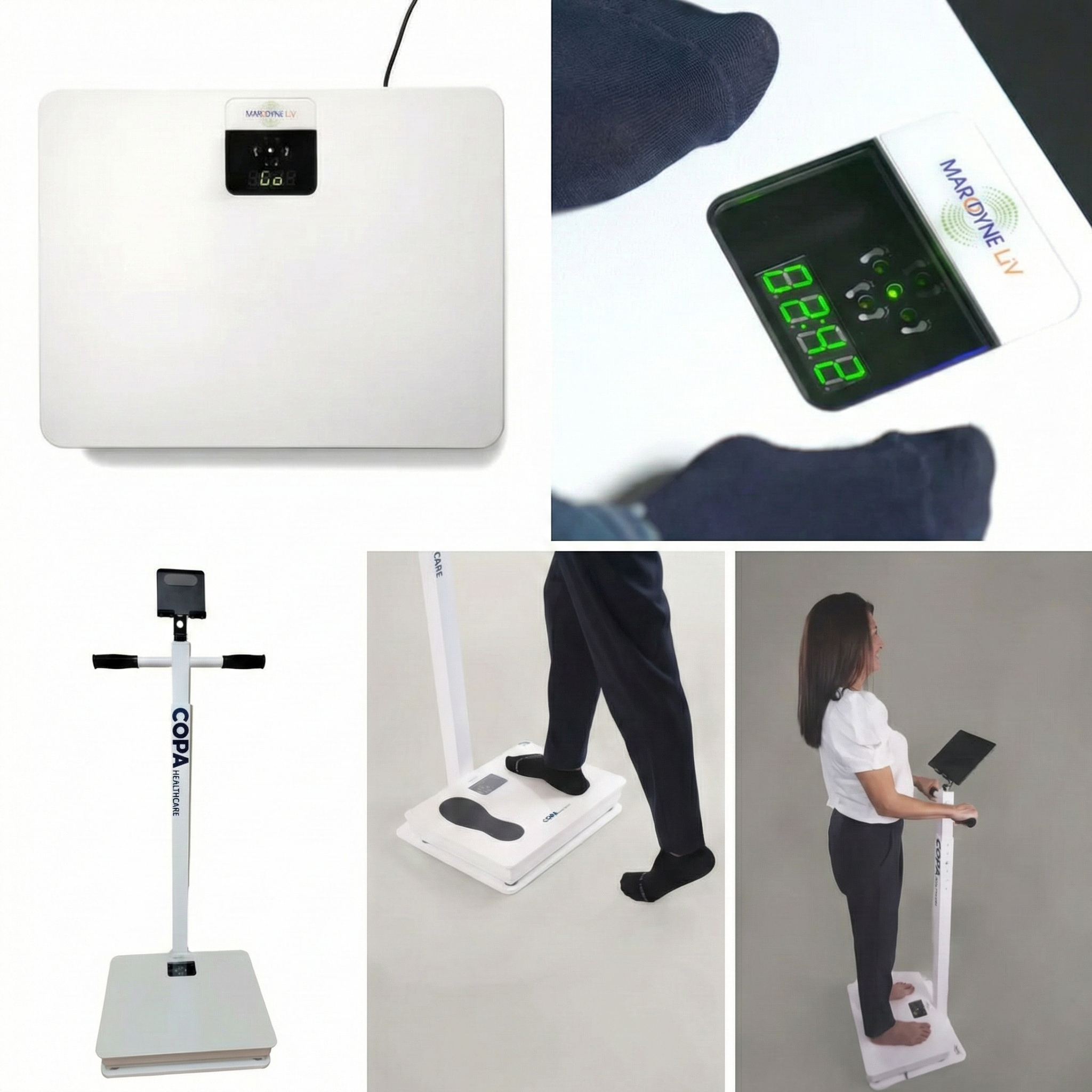
Marodyne LiV
Clinically proven, low-intensity vibration—10 minutes a day to strengthen bone, muscle, and movement safely.
Use code: SB200 for $200 off
Approved Medical Solutions
Your source for Oxalate free Nitric Oxide Supplementation
Non-licensed patients can use code “sbarrett” for a 10% discount.
Licensed practitioners can access the discounts by registering and when at checkout put “podofinquiry” (no space and not case sensitive) in the coupon section.

Ketone
Nitric Oxide
ClearDetox Pro & ClearSleep