
If you’ve ever tried to get clinical research published, you already know the frustration. If you haven’t, buckle up—because what happens behind the scenes of medical publishing is much uglier than most people realize.
This week on The Pod of Inquiry, we sit down with Rich Dubin, publisher and founder of Lower Extremity Review (LER) and LER Expo, to expose the realities of modern medical research. With over 35 years on the inside, Rich breaks down why publishing has become practically obstructionist, detailing the multi-thousand-dollar “access fees” and technicalities that keep good science hidden. (The High Cost of Medical Publishing)
We dive deep into why major journals often act more like pharmaceutical pamphlets than independent science platforms, and how Rich is fighting back by building an alternative model that successfully reached over 25,000 physicians last year alone.
In This Episode we cover:
- The hidden costs and gatekeeping in medical publishing.
- Why the incentives in major medical journals are broken.
- How LER built a virtual CME model that delivers real editorial vetting.
- Game-changing data on peripheral nerve decompression for diabetic neuropathy (and why reulceration rates drop from 40% to 3%).
- The truth about “paper tigers” and captured medical societies.
Rich Dubin is a publishing veteran with over 35 years of experience in the medical space. He is the founder and publisher of Lower Extremity Review (LER) and LER Expo, championing independent science and providing vital, accessible education and CME credits to thousands of physicians worldwide.
🔔 Don’t forget to LIKE, SUBSCRIBE, and hit the notification bell so you never miss an episode! Let us know your thoughts on the peer review process in the comments below.

Watch The Podcast
Listen to The Podcast
Also available on


Author Biography

Rich Dubin
Rich has spent over 35 years in the lower extremity space, building bridges between clinicians, manufacturers, and innovators who are all striving toward the same goal — improving patient outcomes and advancing care.
He is the Founder and Publisher of Lower Extremity Review (LER Magazine) and the creator of lerEXPO, I’ve always believed that education and connection are the most powerful drivers of progress. What started as his passion for storytelling and communication evolved into a mission: to create meaningful platforms where knowledge is shared, relationships are built, and ideas turn into action.
Through initiatives like LER Marketing, lerCONVERSATION, lerPRODUCTS, and lerPOSTERS, Rich has worked to simplify how clinicians and companies engage — turning traditional learning into interactive experiences that inspire collaboration and measurable impact.
He is driven by authenticity, curiosity, and relationships that last. “Whether sitting backstage with a speaker, catching up with a friend I’ve known for decades, or meeting a young clinician just starting out, I’m reminded why I love what I do — this space is full of purpose, innovation, and people who genuinely care.”
Show Notes from this episode
[00:00] Dr. Barrett opens the episode, introducing Rich Dubin, publisher and founder of Lower Extremity Review magazine and LER Expo, and frames the conversation around clinical research, publishing barriers, and the state of medical education.
[01:58] Rich traces his origin story: a 1989 econ/business grad with no direction, drawn into podiatric publishing almost by accident through a life seminar connection with the son of the founder of “Current Podiatry.”
[03:19] The early career arc: Current Podiatry, three years at Podiatry Today, then co-founding Biomechanics magazine in 1994 — a deliberately multidisciplinary title at a time when ortho, podiatry, PT, and O&P rarely spoke to one another.
[04:26] Biomechanics’ success leads to a corporate acquisition; Rich reflects on the transition from scrappy independent publishing to corporate structure, and the mentors (Marcy Holton) who shaped that chapter.
[06:01] Rich leaves corporate to launch Lower Extremity Review in July 2009 — deliberately timed into the recession — refocused strictly on the lower extremity, hip down.
[07:09] LER Expo is born in 2019: a response to two decades and roughly 400 conferences’ worth of frustration with how medical education was delivered. The virtual education arm now runs an estimated 75 events a year.
[07:18] Dr. Barrett pivots to clinical publishing itself, describing a two-plus-year ordeal to get a conflict-of-interest-free peripheral nerve paper accepted, bogged down by prospective-vs-retrospective registration technicalities.
[09:52] The conversation turns to journal integrity broadly, invoking a well-known editorial critique that top medical journals had become closer to pharmaceutical marketing vehicles than independent science.
[10:20] Rich confirms what he’s hearing across the physician community: authors are now routinely asked to pay several thousand dollars in publication or “access” fees on top of doing the underlying research — with no guarantee the article is actually being read.
[11:33] Rich describes LER’s own answer to the readership gap: Gatekeepers, a monthly online journal club hosted by Dr. Jeff Dykes, built to surface genuinely useful clinical content to a wider community.
[13:39] Both discuss the case for open-access publishing models and why traditional journals resist them — largely because print-era advertising revenue has dried up, leaving fees as the remaining lever.
[14:28] Dr. Barrett raises a pointed example — a major journal running dozens of paid pages of advertorial content for an international university — as a case study in how advertising dollars can shape editorial independence.
[18:44] Rich outlines LER’s reach: a list of over 25,000 physicians, more than 55,000 CME credits awarded last year and a projected 100,000+ this year, and 200-plus faculty members cycled through to keep content fresh.
[19:44] The editorial vetting process: submissions are run past an editor and a board of editorial advisors, with an explicit standard of evidence-based content over anecdote or opinion.
[21:26] Rich’s most memorable rejected submission: a physician who invented an untested product in the shower, tried it on a few patients, and asked to be featured on the magazine’s cover.
[23:38] Dr. Barrett introduces his own term — “paper tigers” — for physicians who build polished social media personas around claims that don’t hold up clinically, and both agree the pattern has become more visible in recent years.
[24:29] Rich describes LER’s built-in accountability loop: post-event surveys, speaker ratings after every session, and community feedback that directly shapes which faculty and topics get invited back.
[29:20] Looking back at a 2014 LER feature on peripheral nerve decompression for diabetic peripheral neuropathy — which included Dr. Barrett’s mentor, Dr. A. Lee Dellon — Dr. Barrett notes the striking gap between the strength of the evidence and how slowly it has been adopted.
[31:19] Rich frames the adoption gap as a broader pattern across medicine: entrenched practitioners resistant to new modalities versus younger physicians more open to change, regardless of specialty.
[32:58] A parallel case study: the multi-decade arc of minimally invasive surgery (MIS) in podiatry, from outright professional stigma, to adoption and refinement in Spain and Italy, to its current hybrid resurgence in the U.S.
[36:09] Dr. Barrett lays out the numbers behind peripheral nerve decompression for diabetic neuropathy: roughly 75% sensory restoration, 90%+ pain reduction, and reulceration rates dropping from over 40% to about 3% — and questions why professional societies haven’t embraced it faster.
[37:35] Rich connects the gap to pharmaceutical marketing budgets dwarfing anything a clinical modality can muster, and reaffirms LER’s role in broadcasting underexposed but well-supported interventions to a wider physician audience.
[38:37] A candid exchange about “captured” medical societies — organizations whose sponsorship arrangements create obvious, if rarely named, conflicts of interest.
[41:24] Rich explains LER’s approach to genuine CME engagement — requiring active click-throughs on every session rather than passive credit-banking — and the trade name/CME compliance safeguards built into every faculty deck.
[43:18] Both agree virtual education and in-person, hands-on training (labs, cadaver workshops, sawbones) aren’t competitors but complements: virtual scales awareness, hands-on builds mastery.
[45:02] Dr. Barrett extends the point to referrals — even physicians who don’t pursue a new procedure themselves benefit patients simply by recognizing the indication and referring appropriately.
[46:07] A discussion of multidisciplinary care and the specialty “silos” physicians are never formally trained to break out of, plus the reciprocal, karma-like dynamics of genuine cross-referral networks.
[50:51] Rich shares how listeners can connect: LERMagazine.com for the full magazine archive, LERExpo.com for upcoming and on-demand virtual education, and a direct email for collaboration.
[52:15] Closing sponsor mention: Nature’s Marvels bioregulatory peptides, followed by Dr. Barrett’s standard sign-off and call to action.
Sponsors Of The Episode




BBACK US
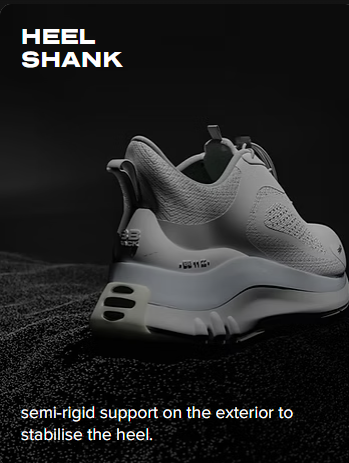
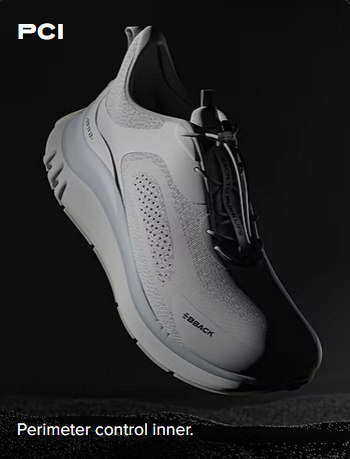
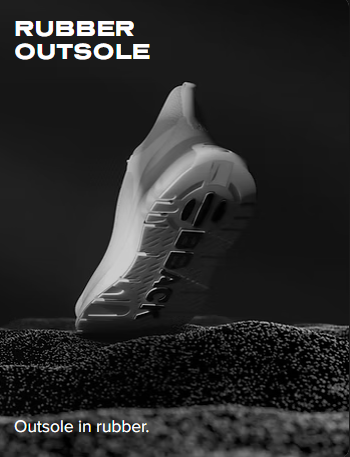
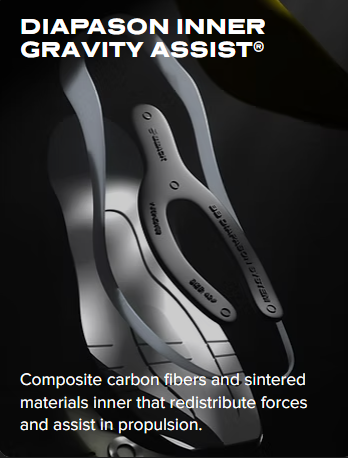
BBACK is a balance shoe that improves movement and makes each step easier.
PRO-DYNAMIC® tech supports natural motion, reduces pressure, and aids circulation.
Use code: POI10 for 10% off your order




Approved Medical Solutions
Your source for Oxalate free Nitric Oxide Supplementation
Non-licensed patients can use code “sbarrett” for a 10% discount.
Licensed practitioners can access the discounts by registering and when at checkout put “podofinquiry” (no space and not case sensitive) in the coupon section.

Ketone
Nitric Oxide
ClearDetox Pro & ClearSleep